The supplement paradox: why more is not always more
You take your vitamins every morning. You choose reputable brands, spend good money, and follow the recommended dosage. Yet you feel no different. Sound familiar?
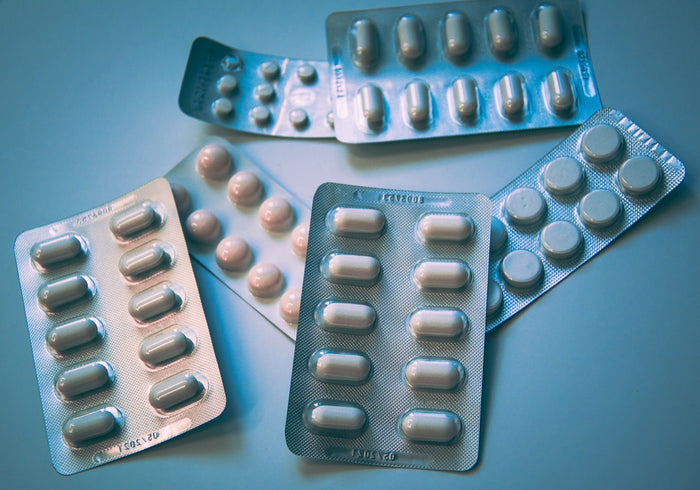
This is the supplement paradox: the gap between what a supplement promises on the label and what it delivers at the cellular level. The uncomfortable truth is that why supplements don't work for many people has nothing to do with the supplement itself. It has everything to do with whether the active substance ever reaches its destination.
The four barriers that block absorption
1. Gastric acid destruction
When you swallow a standard tablet, it enters one of the most hostile environments in the human body: your stomach. With a pH of 1.5 to 3.5, gastric acid is powerful enough to dissolve metal. Many vitamins and minerals — particularly vitamin C, B vitamins, and reduced glutathione — are significantly degraded before they even reach the small intestine.
2. Intestinal wall resistance
Even what survives the stomach still faces the intestinal wall. Water-soluble nutrients must pass through a lipid (fat-based) membrane. Without the right molecular packaging, absorption is slow, incomplete, and highly variable between individuals.
3. Individual gut health
Leaky gut, dysbiosis, inflammation, low stomach acid production, and impaired bile function all reduce absorption further. A person with gut health issues can absorb as little as 5-10% of a standard supplement, even a high-quality one. This explains why the same product produces dramatically different results in different people.
4. First-pass metabolism
Nutrients absorbed through the intestinal wall travel directly to the liver, where a significant portion is metabolised before reaching systemic circulation. This 'first-pass effect' further reduces the effective dose that reaches your tissues and cells.
Bioavailability: what it means and why it matters
Bioavailability is the proportion of a nutrient that, after administration, reaches systemic circulation and becomes available at the site of action. The decisive factor is not what you take — it is what your cells actually receive.
In practical terms, a 1,000mg vitamin C tablet might deliver as little as 490mg to your bloodstream. The remaining 510mg causes osmotic diarrhoea and is excreted. For glutathione and CoQ10, standard oral bioavailability is even lower — often below 5% for CoQ10 in standard capsule form.
The liposomal shortcut: bypassing every barrier
Liposomal technology solves the absorption problem at its root. By encapsulating active nutrients inside microscopic spheres made of phospholipids — the same material as your own cell membranes — the nutrient is essentially disguised as a natural cellular component.
The liposome passes through the stomach intact, is absorbed by intestinal cells via endocytosis, bypasses the intestinal wall barrier, and avoids much of the first-pass liver metabolism. Independent research confirms bioavailability improvements of 3 to 10 times compared to standard oral forms.
The PPH standard: Advanced Dry Liposomal Technology
At Plant Physiology Health, our liposomes are verified by independent TEM analysis confirming real double-layered liposomal vesicles in the final product. Our Advanced Dry Liposomal Technology preserves these structures in a stable dry powder matrix, eliminating oxidation risk.
- Delivers Active ingredients reach your cells, not your toilet.
- Protects No chemical preservatives. 36-month shelf stability.
- Tolerates No stomach upset or constipation associated with standard supplements.
- Proves Batch-specific lab reports publicly accessible on our website.
Conclusion and next step
The question of why supplements don't work is almost always an absorption question. The gap between the label and the cell is where most supplements fail — silently, invisibly, and expensively.
Understanding bioavailability is the first step toward supplementing intelligently. Explore the full PPH range here and find the liposomal formula that is right for you.
Because your vitality is not optional — it is vital.
Frequently asked questions
Sources
- Cara, K.C. et al. (2020). Relative Bioavailability of Vitamin C from Food and Dietary Supplements. Journal of Nutrition. pubmed.ncbi.nlm.nih.gov/32614951/
- Briskey, D. et al. (2019). Liposomal encapsulation enhances anti-inflammatory effects of vitamins. Nutrients. pubmed.ncbi.nlm.nih.gov/30791388/
- EFSA (2017). Overview of procedures for assessment of dietary supplements. EFSA Journal. efsa.onlinelibrary.wiley.com/