Why fatigue often persists despite good sleep habits
You sleep eight hours and still feel exhausted. You cut back on caffeine, eat better, reduce stress where you can — and the tiredness remains. This is a familiar experience for millions of people across Europe.
The reason is often biological rather than behavioural. Persistent fatigue can be associated with factors at the cellular level — including how efficiently your cells produce energy, whether key nutrients are reaching your cells in adequate quantities, and how well your body manages oxidative balance.
Understanding these factors is the first step toward addressing them effectively. Below, we explore five biological areas that research has associated with low energy and persistent tiredness.
Five biological factors associated with low energy
1. Mitochondrial efficiency and cellular energy production
Mitochondria are the energy-producing structures found in virtually every cell in the body. They convert nutrients into ATP — the molecule that powers cellular activity. Research suggests that reduced mitochondrial efficiency is associated with persistent fatigue, though this is one of several potential contributing factors rather than a single diagnosis.
CoQ10 is a naturally occurring compound involved in the mitochondrial energy production process. It is found naturally in the body and in foods such as meat and fish. Research has investigated the relationship between CoQ10 levels and energy-related outcomes.
2. Iron and normal oxygen transport
Iron contributes to normal oxygen transport in the body and to the reduction of tiredness and fatigue.
Iron is essential for the formation of haemoglobin, the protein in red blood cells responsible for carrying oxygen throughout the body. When iron intake is insufficient to maintain normal levels, the body's capacity for normal oxygen transport may be affected. The WHO estimates that iron insufficiency is one of the most common nutritional concerns globally, particularly among women of reproductive age.
3. Blood sugar stability and sustained energy
The body's blood sugar regulation plays a role in how consistently energy is available throughout the day. Meals high in refined carbohydrates can lead to rapid fluctuations in blood sugar levels, which some people associate with energy dips — particularly in the afternoon. Research in nutritional science has investigated the relationship between carbohydrate quality, blood sugar stability, and sustained energy levels.
4. Magnesium and energy metabolism
Magnesium contributes to normal energy-yielding metabolism and to the reduction of tiredness and fatigue.
Magnesium is involved in over 300 enzymatic processes in the body, including those associated with normal energy metabolism. European dietary surveys suggest that magnesium intake is below recommended levels in a significant proportion of adults. Early signs that magnesium intake may be suboptimal can include tiredness, muscle discomfort, and difficulty sleeping.
5. Oxidative balance and antioxidant support
The body continuously produces free radicals as a natural byproduct of metabolism. Antioxidants — including vitamin C and glutathione — play a role in maintaining oxidative balance. Research has explored the relationship between oxidative balance and general wellbeing, including energy levels.
Vitamin C contributes to the reduction of tiredness and fatigue and to normal energy-yielding metabolism.
The absorption gap: why supplements often underdeliver
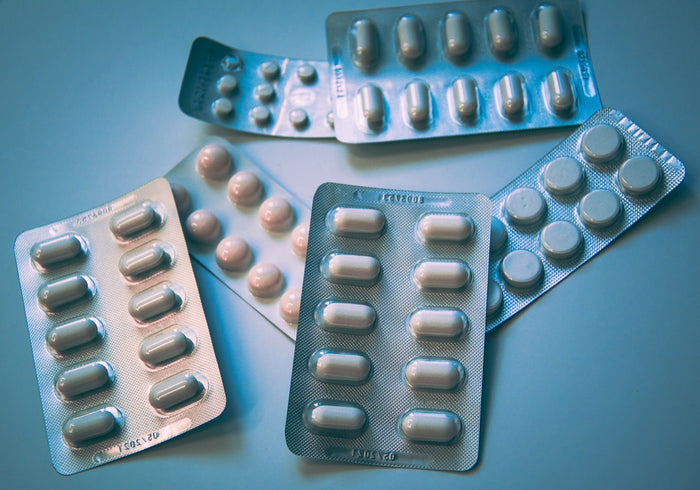
Many people take supplements to support the areas described above — and still notice limited results. One significant reason for this is bioavailability: the proportion of an active ingredient that actually reaches the bloodstream and becomes available to cells.
Standard tablets and capsules must survive gastric acid, digestive enzymes, and the intestinal wall before entering circulation. A meaningful proportion of many active ingredients is broken down or not absorbed during this process. The result is that the dose on the label and the dose that reaches your cells can differ substantially.
The liposomal difference
A liposome is a microscopic sphere built from the same phospholipids that form your cell membranes. The active ingredient is enclosed inside this sphere, which protects it through the digestive process and allows it to be absorbed directly into cells. An independent clinical study by CureSupport (Study CT-0007-17, n=24) found that liposomal vitamin C was 1.76 times more bioavailable than standard vitamin C at equivalent doses.
This improved delivery is relevant for ingredients like glutathione — which research shows has very low oral bioavailability in standard form due to breakdown in the stomach — and for CoQ10, which is a large fat-soluble molecule that standard capsules struggle to absorb efficiently.
The PPH standard: Advanced Dry Liposomal Technology
At Plant Physiology Health, our liposomal products use a dry powder format rather than liquid. This eliminates the oxidation that affects liquid liposomal products over time and removes the need for chemical preservatives.
- Verified liposomal structures Every production batch is independently verified by TEM analysis confirming genuine double-layered liposomal vesicles in the final product.
- No preservatives Stable dry format with 36-month shelf life without refrigeration.
- Plant-based capsule HPMC — suitable for vegans. Sunflower lecithin (non-GMO), not soy.
- Transparent batch testing Heavy metals, microbiological, and liposomal structure results publicly accessible on our website.
Conclusion and next step
Persistent tiredness despite adequate sleep is a common experience with multiple potential biological contributing factors. Understanding these factors — and ensuring that any nutritional support you choose actually reaches your cells — is central to the PPH approach.
Iron contributes to normal oxygen transport in the body. Magnesium contributes to normal energy-yielding metabolism. Vitamin C contributes to the reduction of tiredness and fatigue. These are not marketing claims — they are authorised statements based on evaluation by the European Food Safety Authority.
Explore the full PPH range here and find the formula that fits your needs.
Because your vitality is not optional — it is vital.
Frequently asked questions
Sources
- European Food Safety Authority (EFSA). Authorised EU health claims for iron, magnesium, and vitamin C. ec.europa.eu/food/safety/labelling-nutrition/nut
- CureSupport Nederland B.V. (2017). Bioavailability Study of Liposomal Vitamin C. Study No: CT-0007-17. Conducted by Bio Agile Therapeut.
- Missailidis, D. et al. (2020). An Isolated Complex V Inefficiency and Dysregulated Mitochondrial Function in Immortalized Lymphocytes from ME/CFS Patients. International Journal of Molecular Sciences. www.ncbi.nlm.nih.gov/pmc/articles/PMC7504519/
- World Health Organization (2021). Anaemia. WHO Global Health Observatory. www.who.int/
- Gröber, U. et al. (2015). Magnesium in Prevention and Therapy. Nutrients. www.ncbi.nlm.nih.gov/pmc/articles/PMC4586582/
- Richie, J.P. et al. (2015). Randomised controlled trial of oral glutathione supplementation on body stores of glutathione. European Journal of Nutrition. pubmed.ncbi.nlm.nih.gov/25921684/