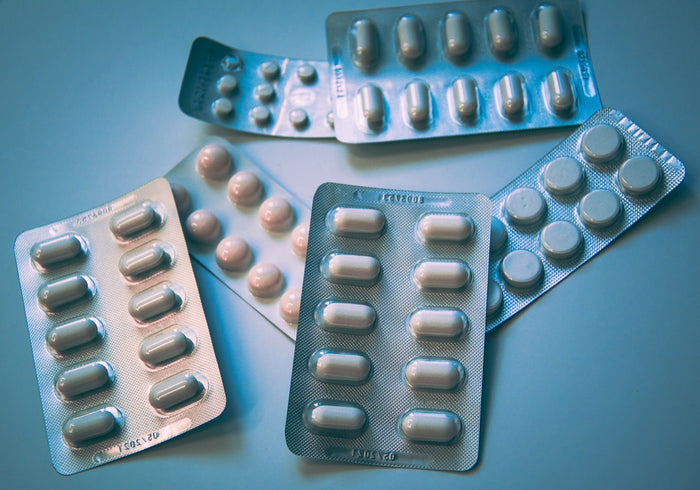

The melatonin misunderstanding
Melatonin has become the default supplement for anyone struggling to sleep. It has a reasonable evidence base for jet lag and delayed sleep phase syndrome. But for the most common sleep problem — difficulty falling or staying asleep due to an overactive, stressed nervous system — melatonin addresses the wrong mechanism entirely.
Melatonin is a chronobiological signal. It tells your body it is night-time. What it does not do is calm a racing mind, reduce cortisol-driven alertness, or quiet the neurological noise that many poor sleepers experience when they close their eyes. Additionally, regular high-dose melatonin may cause morning grogginess and suppress your body's natural melatonin production over time.
What actually keeps you awake
The brain is kept awake by excitatory neurotransmitter activity and kept asleep by inhibitory activity, primarily GABA (gamma-aminobutyric acid). For most people with sleep difficulties, the problem is an imbalance: the brain's brakes are not engaging strongly enough to override its accelerator. Stress, anxiety, caffeine, and irregular schedules all shift this balance toward hyperarousal.
GABA: the brake pedal of your nervous system
GABA (gamma-aminobutyric acid) is the primary inhibitory neurotransmitter in the central nervous system. It reduces neuronal excitability and slows neural firing. The decisive factor: without sufficient GABAergic inhibition, the brain cannot transition from wakefulness to sleep, regardless of how much melatonin is present.
Research using magnetic resonance spectroscopy has found that people with insomnia have significantly lower GABA levels in key brain regions compared to normal sleepers. A 2018 study in Nutrients found that oral GABA (100-300mg) significantly reduced sleep latency and improved sleep quality scores in adults with sleep difficulties.
L-theanine: the alpha wave amplifier
L-theanine is an amino acid found in green tea. It promotes alpha brainwaves — the electrical pattern associated with relaxed, wakeful attention — and increases GABA, serotonin, and dopamine activity. A 2019 randomised trial in Nutrients found 200mg of L-theanine significantly improved sleep quality, reduced sleep latency, and improved morning alertness — without grogginess.
The synergy of GABA and L-theanine
A 2019 study comparing GABA alone, L-theanine alone, and the combination found that the combination produced the greatest reduction in sleep latency and greatest improvement in sleep quality — a synergistic rather than additive effect. L-theanine enhances GABA receptor sensitivity and upregulates GABA synthesis, making the brain more responsive.
The supporting cast
- Ashwagandha KSM-66 (100mg) Reduces cortisol by up to 27.9% in randomised controlled trials, addressing the primary driver of stress-related sleep disruption.
- Chamomile extract (100mg) Contains apigenin, which binds to GABA-A receptors. A 2017 trial found chamomile significantly improved sleep quality in elderly adults.
- Lemon balm extract (50mg) Inhibits GABA transaminase, effectively increasing GABAergic tone.
- Montmorency cherry extract (70mg) One of the few natural dietary sources of melatonin, plus tryptophan and anthocyanins that support melatonin synthesis — delivered within a natural matrix of co-factors.
The PPH formula
- GABA 250mg
- Ashwagandha KSM-66 100mg
- Chamomile extract 100mg
- Montmorency cherry extract 70mg
- Lemon balm extract 50mg
- L-theanine 50mg
- Folate 400mcg (as 5-methylfolate)
One capsule per day, 30-60 minutes before sleep. No melatonin. No morning grogginess.
Conclusion and next step
Melatonin tells your brain it is time to sleep. GABA and L-theanine make it possible. For the majority of people whose sleep problems are driven by stress or a hyperactive nervous system, the neurological approach outperforms the hormonal one.
Discover PPH GABA + Ashwagandha KSM-66 here.
Your vitality is not optional — it is vital.
Frequently asked questions
Sources
- Byun, J.I. et al. (2018). Safety and Efficacy of GABA from Fermented Rice Germ in Patients with Insomnia. Nutrients. pubmed.ncbi.nlm.nih.gov/30257176/
- Kim, S. et al. (2019). GABA and L-theanine mixture decreases sleep latency and improves NREM sleep. Food Science & Biotechnology. pubmed.ncbi.nlm.nih.gov/31007774/
- Pratte, M.A. et al. (2014). Ashwagandha for Anxiety: A Systematic Review. Journal of Alternative and Complementary Medicine. pubmed.ncbi.nlm.nih.gov/25211657/
- Howatson, G. et al. (2012). Effect of tart cherry juice on melatonin levels and enhanced sleep quality. European Journal of Nutrition. pubmed.ncbi.nlm.nih.gov/21901389/